Travel to Switzerland, Liechtenstein, Innsbruck and Bavaria
Day 4 Zurich - Liechtenstein - Innsbruck (321 Km.)
Liechtenstein, a small landlocked country situated between Switzerland and Austria, has a rich history despite its modest size. The area was settled since prehistoric times, with archaeological findings indicating the presence of Celts and Romans. In the Middle Ages, the territory was divided into various small lordships under the Holy Roman Empire. The modern state of Liechtenstein was formed in 1719, when Emperor Charles VI united the lordships of Schellenberg and Vaduz under the ownership of the Liechtenstein family, granting them imperial immediacy. This meant that the new principality reported directly to the Emperor, rather than being subordinate to regional lords. In 1806, following the dissolution of the Holy Roman Empire, Liechtenstein became part of the Confederation of the Rhine under Napoleon’s influence, and later joined the German Confederation. After the Austro-Prussian War of 1866, the principality became fully independent. During the 20th century, Liechtenstein established close political and economic ties with Switzerland, adopting the Swiss franc and aligning its foreign policy. Today, it is known for its strong financial sector, high standard of living, and preserved alpine landscapes.
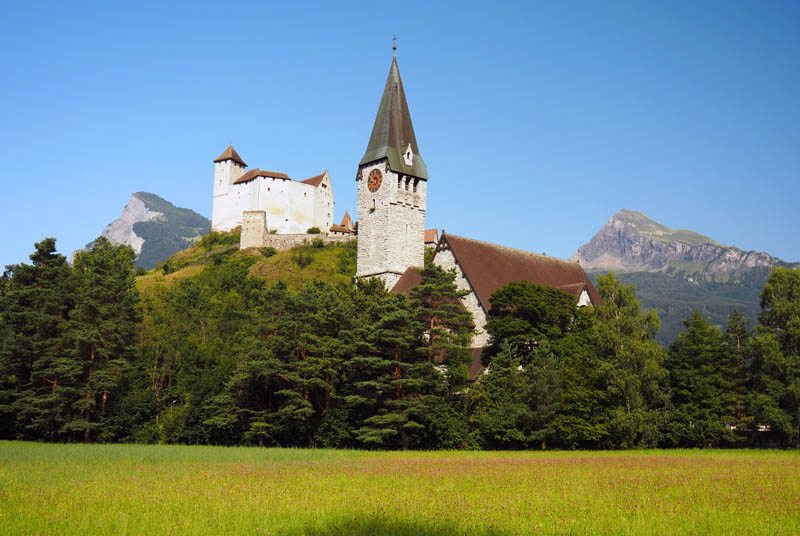
Balzers - Burg Gutenberg
(in 124 Km.) Balzers: Our journey began in the southern part of the country, in the town of Balzers, where we first visited Burg Gutenberg, a well-preserved medieval castle situated on a hill overlooking the surrounding valley. This castle dates back to the High Middle Ages and has served various purposes over the centuries, including defense and administration. Although its interior is not open for regular public visits, its exterior and strategic location remain historically significant. After exploring the area around the castle, we walked to the nearby St. Nicholas Catholic Church, which is the main parish church of Balzers. The church features traditional alpine architecture and has long served as a spiritual center for the community. From Balzers, we began our ascent into the mountains, following the winding roads that connect the lower valley to the higher alpine villages.
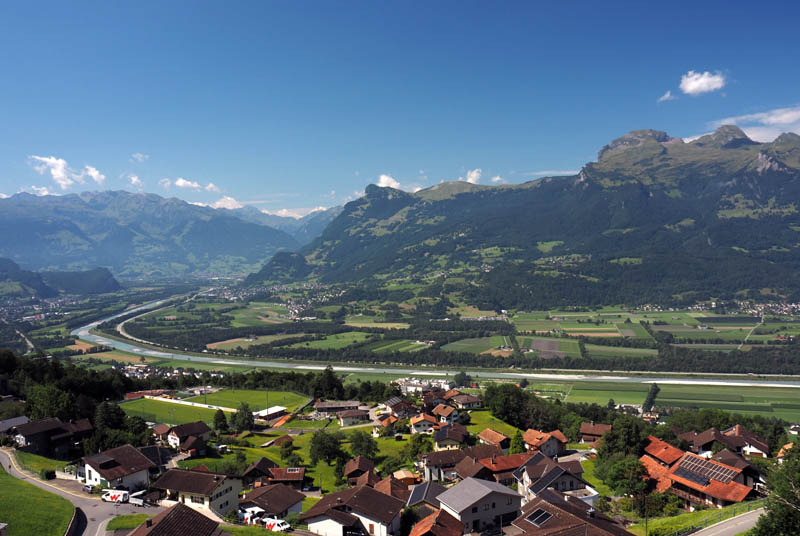
Triesenberg - Views of the Rhine Valley
(in 9 Km.) Triesenberg: Our next stop was Triesenberg, a village located on an elevated plateau that offers expansive views over the Rhine Valley and the settlements below. Historically, Triesenberg is notable for being home to the descendants of the Walser people, a group of alpine settlers who migrated to the region in the Middle Ages. Their influence can still be seen in the local dialect and cultural traditions. We visited the Triesenberg parish church, dedicated to St. Joseph, which is located in a prominent position within the village. From the viewing areas around the church and surrounding streets, we were able to observe the layout of the valley, the course of the Rhine River, and the mountainous terrain that characterizes Liechtenstein’s geography. The village’s architecture includes typical wooden houses and structures adapted to alpine conditions, reflecting the area’s historical development and traditional way of life.
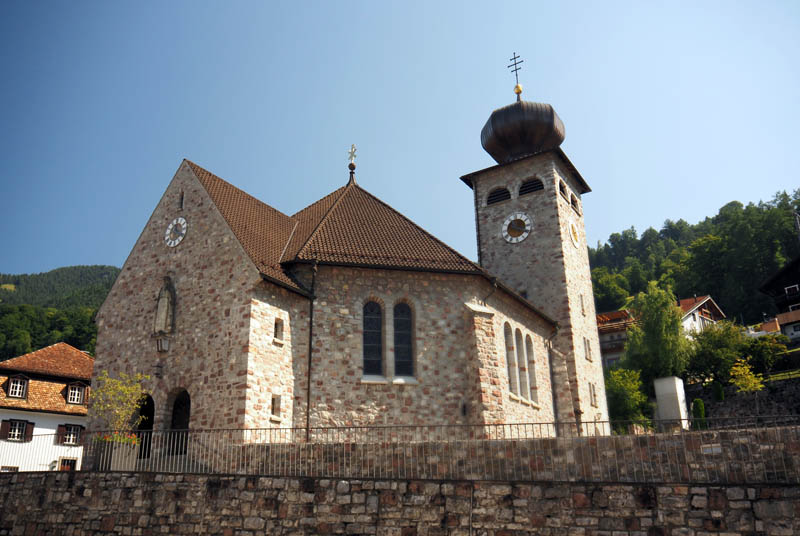
Triesenberg parish church
(in 5 Km.) Steg: Continuing our route, we drove further into the mountains until we reached the small village of Steg, located in a high alpine valley. Steg is known for its wooden chalets and its proximity to Stausee Steg, a reservoir created for hydroelectric purposes. The area is popular for outdoor activities such as hiking and winter sports. We walked through the village, observing the wooden houses with their steep roofs designed to withstand heavy snowfalls. After exploring the surroundings, we stopped for lunch at the Seeblick restaurant, which is located near the lake and provides views over the water and surrounding mountains. The restaurant serves traditional dishes, and the location makes it a convenient stop for travelers continuing further into the alpine region. Following our meal, we spent some additional time by the lakeside before continuing our ascent.
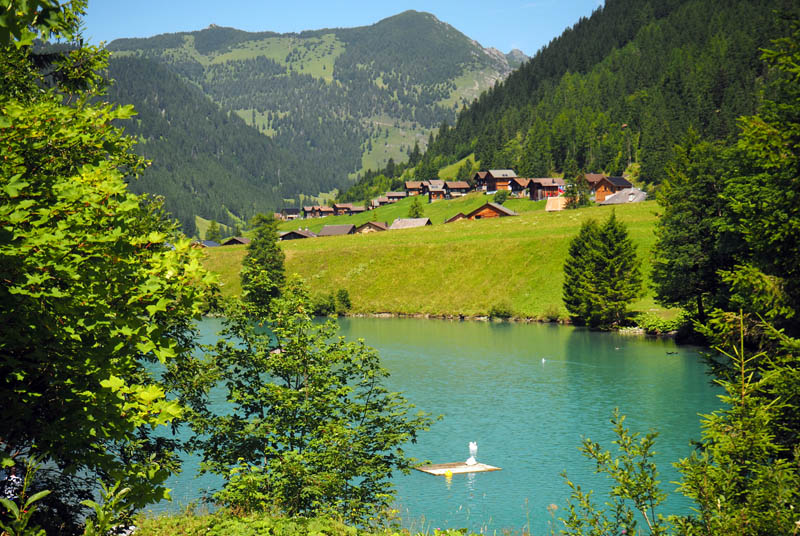
Stausee Steg
(in 3 Km.) Malbun: From Steg, we continued driving up the valley to Malbun, Liechtenstein’s main ski resort and a center for alpine tourism. The village is located near the border with Austria and serves as a base for hiking trails and winter sports facilities. In Malbun, the buildings are primarily hotels, chalets, and structures designed to support tourism in both summer and winter seasons. The surrounding peaks are accessible via ski lifts and hiking paths, making it a key point for recreational activities in the country. After spending some time walking around the village and observing its layout, we began our descent back toward the main valley, following the same route down through Steg and Triesenberg. The road offers continuous views of the Rhine Valley as it winds back down toward the capital.
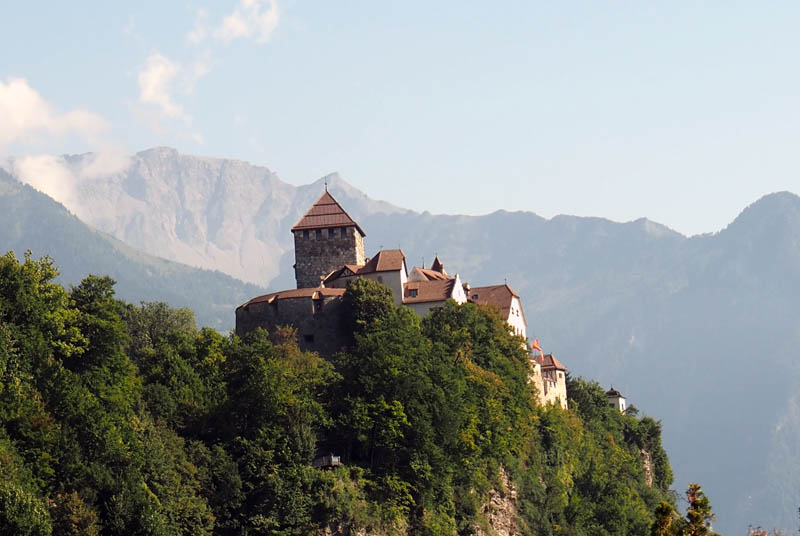
Vaduz castle
(in 13 Km.) Vaduz: Upon reaching Vaduz, the capital of Liechtenstein, we first approached the Vaduz Castle, which sits on a hill overlooking the city. The castle dates back to the 12th century and has been expanded and renovated over the centuries. Today, it serves as the official residence of the Prince of Liechtenstein and is not open to the public. However, it remains an important symbol of the country’s history and governance. From the viewing areas near the castle, it is possible to see the city below, as well as the surrounding mountains and the Rhine River. After this brief stop, we descended into the city center to continue our visit on foot.
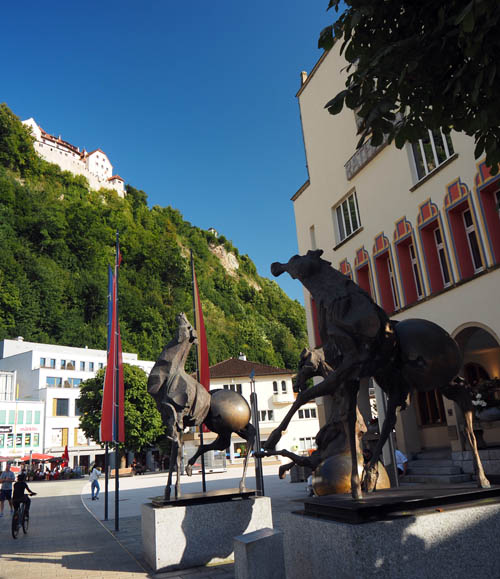
Vaduz - Rathaus
We explored Das Städtle, the main pedestrian street in Vaduz, which features government buildings, museums, and commercial establishments. Along this route, we visited the Rathaus Vaduz, the town hall, which houses municipal offices and is an example of traditional alpine civic architecture. We also stopped at the Cathedral of St. Florin, the principal Catholic church of Vaduz, built in the neo-Gothic style in the late 19th century. The cathedral serves as the seat of the Archdiocese of Vaduz and features a tall spire visible from various points in the city. As we walked through the pedestrian area, we passed several art installations and modern buildings that reflect the country’s emphasis on culture and contemporary architecture.
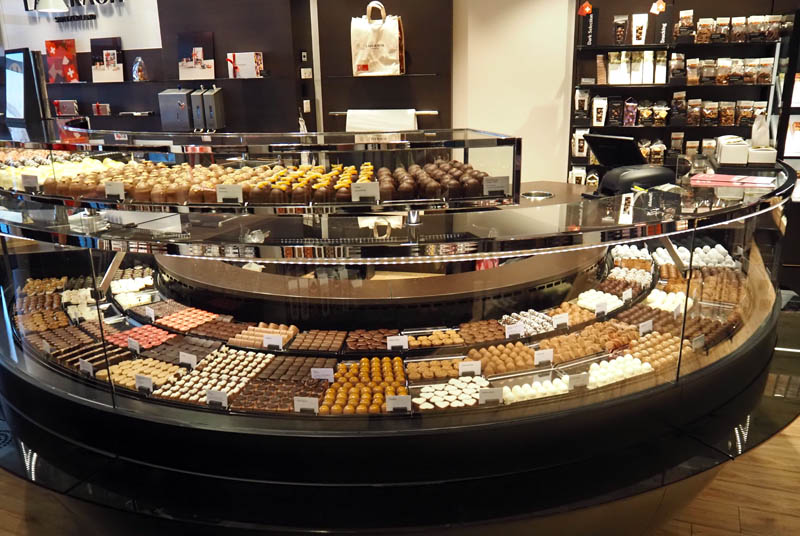
Vaduz - Läderach shop
During our time in Vaduz, we also made a stop at Läderach, a Swiss chocolatier with a shop located in the city center. Here, we purchased chocolates and other confectionery products to take with us on our journey. This brief visit provided an opportunity to experience one of the region’s most renowned products, as Swiss chocolate is well known internationally. After completing our purchases, we returned to Das Städtle and prepared to continue our route toward the northern part of the country, making a final stop before leaving Liechtenstein.
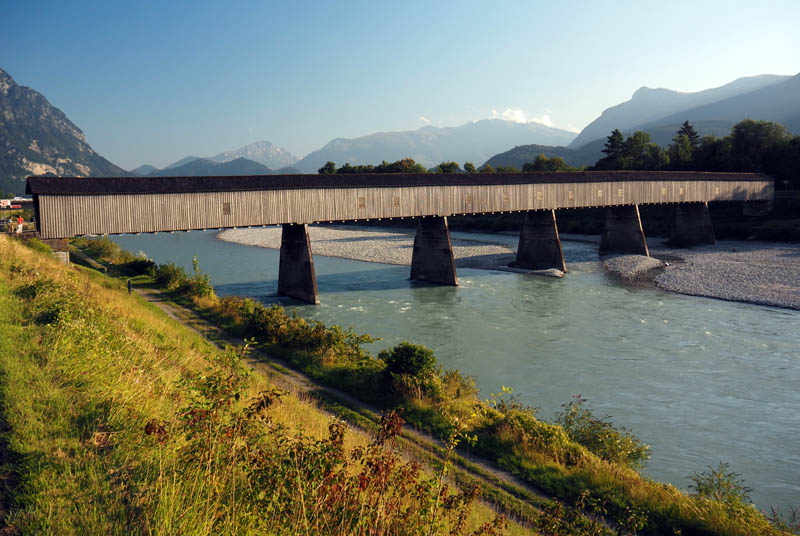
Vaduz - Alte Rheinbrücke
Our last point of interest was the Alte Rheinbrücke, or Old Rhine Bridge, which connects Vaduz with Sevelen in Switzerland. This wooden covered bridge dates back to the early 20th century and serves as a pedestrian crossing between the two countries. It replaced earlier structures that had been damaged by floods and other natural events. Walking across the bridge, we were able to observe the course of the Rhine River, which serves as the natural border between Liechtenstein and Switzerland. The structure itself is built entirely of wood and is one of the last surviving covered bridges of its kind in the region. After this visit, we returned to our vehicle and took the nearby motorway, heading in the direction of Innsbruck to continue our journey through the Alps.
(in 167 Km.) Innsbruck: Resting in this Austrian city.